

Manuka Honey Shelf Life: Does Crystallization Affect Potency?

Manuka honey shelf life is longer than most people expect, and this honey has been prized for its healing and nutritional properties for generations. Its natural antibacterial, antiseptic, and antioxidant qualities make it more than a pantry staple. It is a functional food with genuine medicinal potential.
But does that potential fade with crystallization, temperature swings, or a jar that has been sitting around for a while? Here is what actually happens to Manuka honey over time, and what you can do to keep every jar at its most bioactive.
Why Does Manuka Honey Crystallize?
Manuka honey comes from the distinctive nectar honeybees collect from Manuka trees, and it is made up mainly of three natural sugars: glucose, fructose, and sucrose. Sucrose and glucose digest quickly for a fast energy boost, while fructose releases more slowly for longer-lasting energy. Trace vitamins, minerals, and antioxidants round out the profile, which is part of why Manuka honey is considered a healthier alternative to refined sugar.
When Manuka honey sits in cold temperatures, roughly 50 to 60°F (10 to 15°C), the less-soluble glucose separates from the water in the honey and forms crystals. That is honey crystallization.
Contrary to what a lot of people assume, crystallization in pure, raw honey is a natural and harmless process. The honey takes on a granular, semi-solid, or candied texture, but the medicinal qualities of this functional superfood do not change. No nutrients or healing enzymes are lost in the process.
Honey Crystallization Is a Sign of Purity
Our high strength MGO-rated Australian Manuka honey is raw, organic, and cold-extracted. We deliberately keep it as close to its natural state as possible so the beneficial enzymes and therapeutic effects stay intact.
That means our honey can crystallize from time to time, and that is a perfectly natural process. It does not affect the quality, taste, or efficacy of the honey, and it remains completely safe to eat. Crystallization is also easy to reverse without harming any of the honey's bioactive properties.
How Does Manuka Honey Preserve Its Potency?
Manuka honey shelf life is long by design. With proper storage, the bioactive compounds methylglyoxal (MGO) and its precursor dihydroxyacetone (DHA), along with their medicinal properties, stay constant over time.
The high MGO strength of Biosota Manuka honey comes from careful cold extraction straight from the hive. We keep heat out of the honey-making process entirely, since heat can destroy the natural enzymes and bioactive compounds that make Manuka honey what it is.
MGO develops naturally as nectar converts into honey. Manuka honey reaches maximum maturity when dihydroxyacetone (DHA), a precursor compound present in Manuka flower nectar at varying levels, finishes converting into MGO. Once that ratio hits 1:1, the MGO has finished aging.
Because MGO strength naturally builds over time, we mature our Manuka honey for 12 to 24 months after harvest before it is ever bottled, at exactly the right temperatures to keep activity levels optimal and the grade and quality fully intact.
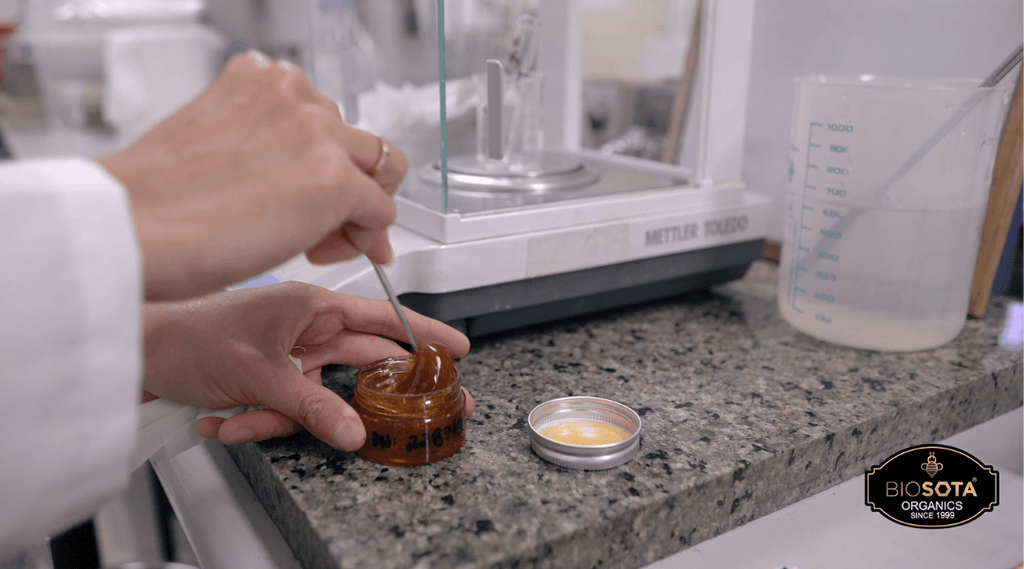
Every batch of our pure Australian Manuka is tested at independent laboratories before packaging, to confirm high levels of MGO/NPA activity and prove its authenticity.
Do Time and Temperature Affect Biosota's DHA and MGO Levels?
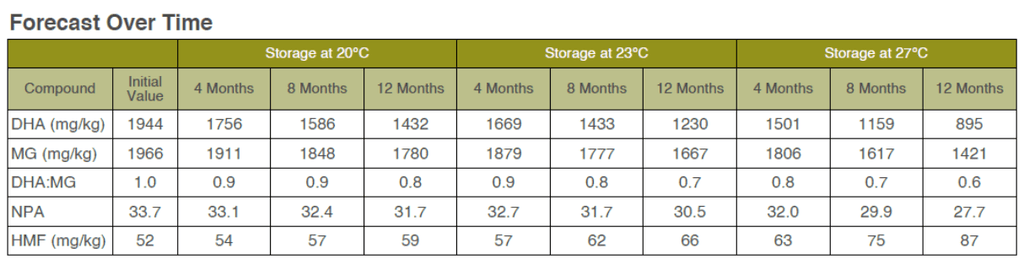
Analytica Laboratories ran an MGO forecast model on our superior grade Manuka honey 1200 and 1700 with results that surprised even us. Stored at 68°F (20°C), the measured MGO and DHA levels in both grades stayed constant, whether the honey had been sitting for 4 months or a full year.
At higher storage temperatures of 73°F (23°C) and 81°F (27°C), some DHA converted into MGO, and both bioactive compounds in the matured honey dropped in quantity, and in potency, over a 12-month period.
The table below shows exactly how much.
A separate study looked at a range of raw and processed native Australian honeys, examining what heat and filtration do to their antibacterial and antifungal activity. Among the honey types that started out with antimicrobial properties, that activity dropped significantly after 8 hours of heat treatment at 113°F (45°C).
Short-term exposure to higher heat, the kind a jar might see in shipping, does not touch MGO levels. Even so, we recommend keeping Manuka honey out of boiling water and away from the stovetop for best results.
Manuka Honey Longevity: From Ancient Times to Today
Storing honey the right way prevents crystals from forming and stretches Manuka honey shelf life even further. Research shows that honey stored correctly can last for thousands of years. The best-known example is the 3,000-year-old honey archaeologists excavated from King Tut's tomb in 1922. Those jars were still perfectly edible.
Biosota's Manuka honey shelf life carries a five-year "Expiry Date" from the packaging date, which exists to guarantee the MGO rating stays accurate over the life of the product. The MGO bioactivity rating will naturally shift over time, but Manuka honey itself does not expire. It remains safe to eat well past the printed Expiry Date.

The Best Way to Store Manuka Honey
Bright light, high humidity, and extreme temperatures over long stretches of time all work against the freshness and nutritional value of honey. That is why it's best to store your pure Manuka in a cool, dark, dry pantry. It extends Manuka honey shelf life, helps keep the flavor intact, and slows crystallization.
To protect the health benefits of compounds like MGO and DHA:
- Keep the honey in its original jar or bottle.
- Store it at room temperature, around 68°F (20°C), for a softer, more pourable honey and to hold optimal MGO bioactivity over the long term.
- Move it to the refrigerator for a firmer texture, or if you live somewhere hot and humid.
- Keep it below 113°F (45°C) to preserve the gut-friendly bacteria naturally present in the honey.
Getting storage right is the single biggest lever you have over Manuka honey shelf life, more than anything else on this list.
For extra protection, our high medicinal-grade honey ships in Violet Glass Miron jars. These biophotonic containers help preserve the honey and protect its potency by shielding it from harmful UV light.
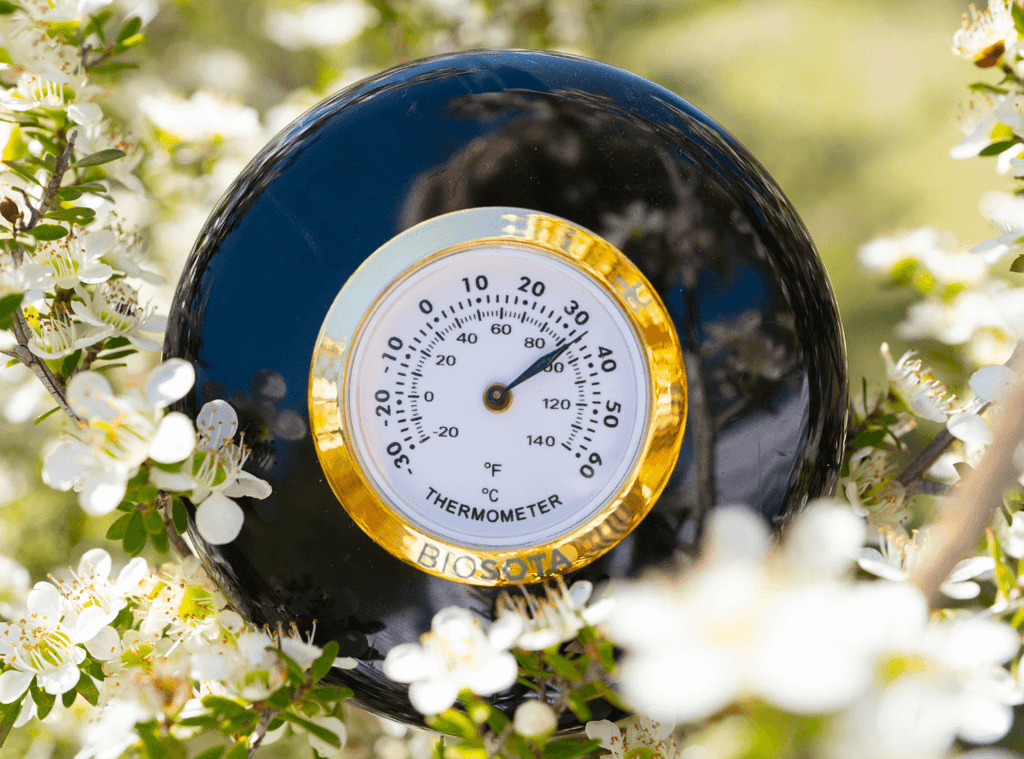
Our 500g Manuka honey gift boxes go a step further with a built-in temperature sensor lid, so you can monitor conditions and keep the honey stored exactly the way it should be.
One more thing worth knowing: organic honey rarely spoils. Its prebiotic elements, low moisture content, and low acidic pH all act as natural barriers against deterioration.
How to Restore Crystallized Honey to a Smooth, Flowing Consistency
Thick, grainy honey still tastes great, but if you want that classic pouring consistency back, warm it gently in a water bath.
Skip the microwave. It can overheat the honey and cause a real loss of beneficial compounds.
To bring crystallized honey back with a water bath, follow these four steps:
- Fill a bowl partway with warm, not boiling, water.
- Submerge the jar of Manuka honey in the water, making sure the lid is on tight.
- Let it sit for 10 to 15 minutes, until the honey returns to a liquid state.
- Stir the honey now and then to speed things along.
Questions about crystallization, storage, Manuka honey shelf life, or any of our products? Reach out through our website chat or our contact us page.
References
- The effect of standard heat and filtration processing procedures on antimicrobial activity and hydrogen peroxide levels in honey: https://www.frontiersin.org/journals/microbiology/articles/10.3389/fmicb.2012.00265/full#B8
- Discover the oldest honey ever found (from King Tut's tomb?): https://a-z-animals.com/blog/discover-the-oldest-honey-ever-found-from-king-tuts-tomb/
- How to store honey: https://www.savorysuitcase.com/how-to-store-honey/
Further Reading
- Biosota Organics Best Manuka Honey Brand for Purity Strength & Quality: https://biosota.us/blogs/news/biosota-organics-best-manuka-honey-brand-for-purity-strength-quality
- Biosota Organics Manuka Honey Highest Grade in the World: https://biosota.us/blogs/news/biosota-organics-manuka-honey-highest-grade-in-the-world
Statements made have not been evaluated by the FDA (U.S. Food & Drug Administration) or TGA (Australian Therapeutic Goods Administration). Products sold are not intended to diagnose, treat, cure, or prevent any disease. Manuka honey is not intended to be a substitute for other medicines or advice and is best used in conjunction with any existing treatment plans. Please consult your healthcare professional before beginning any treatment. For all of the science-backed and evidence-based information on the natural healing properties of medicinal-grade Manuka honey, please refer to the latest published Manuka Honey research and use at your own discretion.